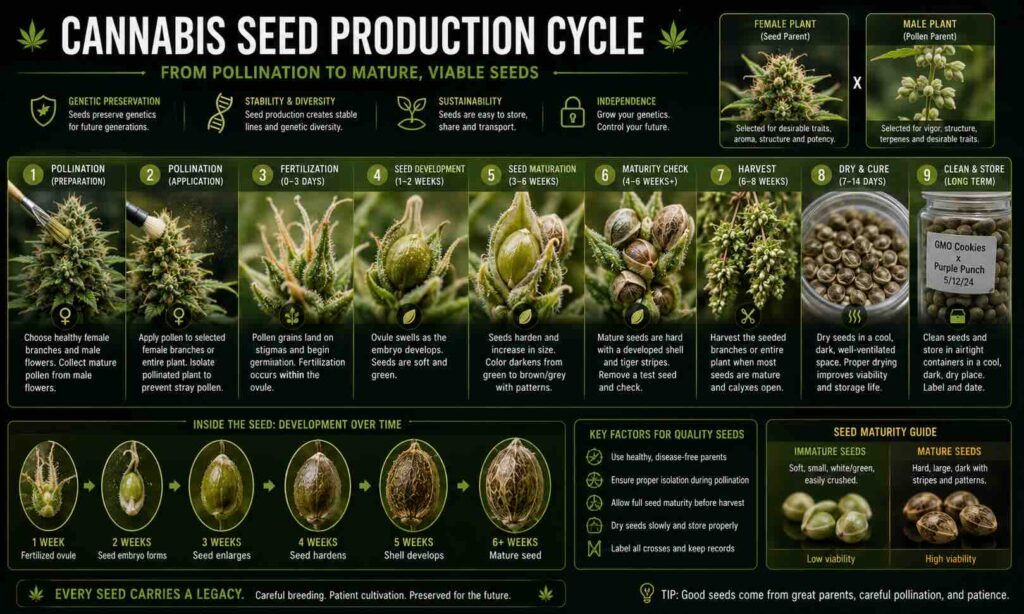
Cannabis seed production is one of the most important aspects of cannabis breeding and genetic preservation. Every modern cultivar begins with a seed, and the process of creating high-quality seeds requires careful planning, controlled pollination, and a thorough understanding of plant development. While many growers focus primarily on cultivation, seed production remains the foundation upon which future generations of cannabis genetics are built.
Producing viable seeds involves much more than allowing plants to reproduce naturally. Professional seed production programs focus on genetic selection, plant health, stability, and consistency. Each stage of the process plays a role in determining the quality of the final seed stock and the reliability of future generations.
Selecting Parent Plants
The first stage of seed production involves selecting suitable parent plants. This step is critical because the characteristics of the parents influence the genetic potential of the offspring. Breeders often evaluate factors such as vigor, growth structure, adaptability, stability, and overall plant performance before choosing breeding candidates.
Careful selection helps improve consistency and increases the likelihood that desirable traits will be expressed in future generations. Parent selection is one of the most important decisions in any breeding project because it establishes the genetic foundation for everything that follows.
Strong seed production begins with strong genetics. The quality of the parent plants often determines the long-term success of the breeding project.
Thoughtful selection helps preserve valuable characteristics while supporting future genetic development.
The Pollination Process
Once suitable parent plants have been identified, pollination can begin. Pollination occurs when pollen from a male plant reaches the reproductive structures of a female plant, initiating seed development. In professional breeding projects, this process is often carefully controlled to ensure that only selected genetics contribute to the next generation.
Controlled pollination helps breeders maintain accuracy and avoid unwanted genetic combinations. By isolating breeding stock and managing pollen transfer, seed producers can create specific crosses designed to achieve particular objectives.
Successful pollination marks the beginning of seed formation and represents a crucial stage in the breeding cycle.
Precision during this phase helps maintain genetic integrity and project consistency.
Seed Development and Maturation
After pollination occurs, the plant begins directing energy toward seed production. During this period, seeds gradually develop and mature within the flowers. Proper environmental conditions remain important because plant health directly influences seed quality.
Mature seeds typically become harder, darker, and more resilient than immature seeds. Allowing sufficient time for complete development helps maximize viability and improves future germination potential.
Seed producers often monitor development closely to ensure that harvesting occurs at the appropriate stage. Premature harvesting can reduce quality and negatively affect long-term storage potential.
Patience during maturation is essential for producing reliable seed stock.
Harvesting and Processing Seeds
Once seeds have reached maturity, the harvesting process can begin. Careful handling helps prevent damage and protects seed viability. After harvest, seeds are typically separated from plant material and prepared for storage or future use.
Proper processing includes cleaning and evaluating seed quality. Damaged or poorly developed seeds are often removed to maintain overall consistency. The goal is to preserve only healthy seeds capable of supporting future cultivation projects.
Growers interested in exploring professionally developed cannabis genetics can learn more through acheter en ligne Ministry of Cannabis. Understanding seed production helps cultivators appreciate the effort required to create reliable genetics.
Quality control remains important throughout every stage of production.
Storage and Long-Term Preservation
Seed production does not end after harvest. Proper storage plays an essential role in maintaining viability and preserving genetic resources. Environmental factors such as temperature, humidity, and light exposure can influence seed longevity.
Carefully stored seeds can remain viable for extended periods and serve as valuable genetic archives for future breeding projects. Preservation helps protect genetic diversity and ensures that important cultivars remain available for future generations.
Additional information regarding CBD topics and educational resources can be explored through https://lacremeducbd.fr/blog/cbd.
Long-term preservation supports both breeding innovation and genetic conservation.
Final Thoughts
Cannabis seed production is a detailed process that begins with parent selection and continues through pollination, seed development, harvesting, and storage. Every stage contributes to the quality and reliability of the final seeds.
By understanding how seeds are produced, growers gain a greater appreciation for the work involved in preserving and improving cannabis genetics. High-quality seed production remains one of the most important pillars supporting the future of cannabis cultivation and breeding.